Key Takeaways
- Phuket cuisine is shaped by Hokkien Chinese, Southern Thai, and Malay culinary influences, earning the island a UNESCO “City of Gastronomy” title.
- Signature flavors are spicy, sour, coconut-rich, and seafood-heavy, with local ingredients like tamarind, turmeric, and shrimp paste.
- Must-try dishes include Hokkien Mee, Moo Hong, Gaeng Som Pla, Roti, O-aew, and freshly grilled seafood.
- Top Phuket food spots include: Sunday Markets in Phuket Old Town, Naka Weekend Market, Chillva Market, Boat Avenue Fun Friday Market, and Rawai Seafood Market.
- Street food safety tips: choose busy stalls, eat hot dishes, carry small bills, and learn local spice level terms.
- Cultural pairing tip: Combine your Phuket food adventure with a visit to Amorn Phuket Pearl Farm for a well-rounded, meaningful experience
Table of Contents
- Phuket Cuisine: Where It Comes From
- What Makes Phuket Street Food Different
- Must‑try Phuket Street Food and Local Dishes
- Where to Find the Best Phuket Street Food
- Tips for Enjoying Street Food in Phuket
- Complete Your Food Adventure with a Cultural Experience
- Frequently Asked Questions
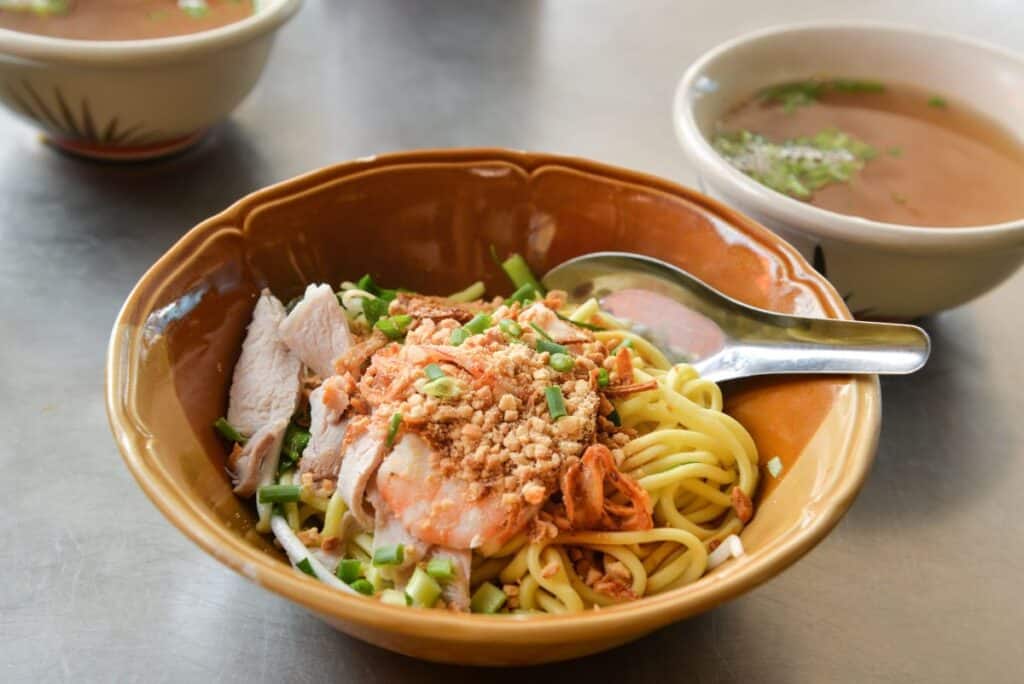
Want to try something else besides beaches and island hopping? Phuket’s food scene tells the island’s story just as vividly as its coastline. From wok‑fried noodles and slow‑braised pork to coconut desserts and fresh seafood, street food in Phuket offers flavors shaped throughout generations of the island’s communities.
If you’re exploring non-beach attractions in Phuket, adding food tours to your plan gives you a deeper connection to the island’s gastronomic offerings. This guide covers what to eat, where to find the best Phuket food, and how to combine culinary discoveries with a visit to Amorn Phuket Pearl Farm for a meaningful cultural stop.
Phuket Cuisine: Where It Comes From
Phuket’s cooking reflects a unique blend of Hokkien Chinese settlers, Southern Thai Muslim communities, and coastal fishing families. You’ll notice Chinese braising techniques, bold southern-style spices, and seafood appearing across menus, from humble carts to long‑running family kitchens.
Every traditional Phuketian dish carries a piece of that history. So much so that Phuket earned UNESCO’s “City of Gastronomy” title for preserving culinary heritage and supporting local producers and traditions.
What Makes Phuket Street Food Different
- Bold flavor balance: Expect strong chili heat, bright sour notes, rich coconut, and aromatic herbs. Dishes often taste more intense than many central Thai recipes.
- Local ingredients: Fresh seafood, turmeric, tamarind, shrimp paste, coconut milk, and southern curry pastes are often used. Malaysian and Javanese influences also shape spice blends and cooking styles.
- Heritage techniques: Hokkien noodles, soy‑braised meats, dim sum breakfasts, and slow stews reflect Chinese migration patterns.
Must‑try Phuket Street Food and Local Dishes
Savory and Soupy Favorites
- Hokkien Mee: Yellow egg noodles stir‑fried or served in gravy with prawns, squid, pork, and egg.
- Moo Hong: Slow‑braised, sweet-savory pork belly cooked with soy sauce, garlic, and pepper.
- Gaeng Som Pla: A bright, sour fish curry with turmeric and chili.
- Pu Pad Pong Karee: Fresh crab stir‑fried with egg, mild curry powder, and milk.
- Kanom Jeen Phuket Style: Rice noodles paired with fish or vegetable curries, often served with herbs and pickled sides.
- Nam Prik Goong Sieb: Southern chili paste mixed with dried shrimp, eaten with fresh vegetables.
Street Snacks and Quick Bites
- Roti: Flaky Thai pancakes filled with egg, banana, or paired with savory curry dips.
- Dim Sum: Morning ritual in Phuket Town, where various spots offer steamed dumplings, buns, and small plates reflecting Chinese roots.
- Khao Mon Gai: Hainanese chicken rice with fragrant broth and dipping sauces.
- Satay: Grilled skewers with creamy peanut sauce, perfect for walking and snacking.
- Lo Ba: Deep-fried or braised pork offal fritters, a unique Phuket delicacy.
Desserts and Sweets
- O‑aew: A jelly dessert served with shaved ice, palm seeds, and red beans.
- Ah‑pong: Thin coconut crepes, crispy at the edges and slightly sweet.
- Tao Sor: Flaky pastry filled with egg, mung bean, and other sweet or savory fillings, often boxed as edible souvenirs.
Fresh Seafood
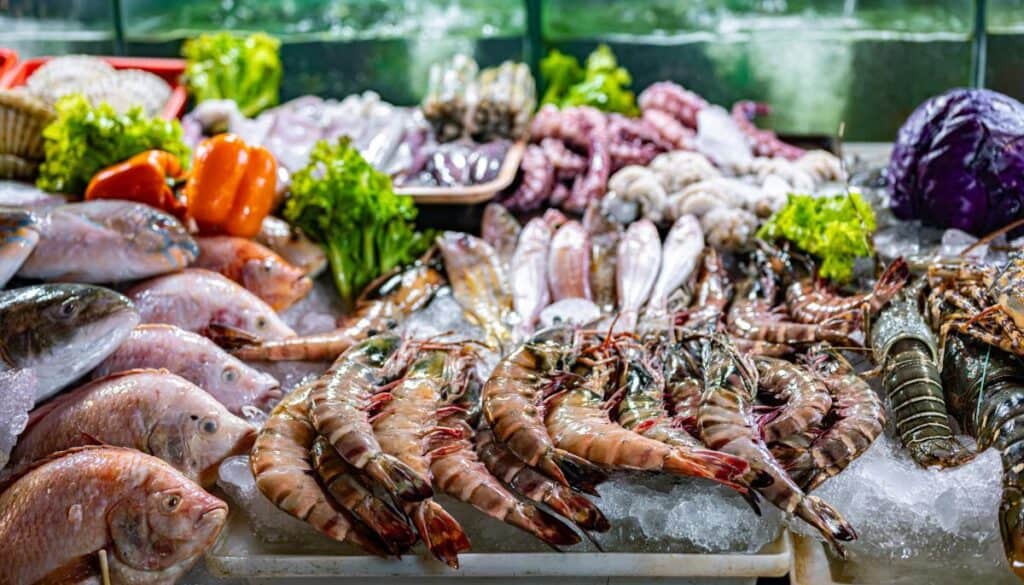
Phuket’s coastal location means grilled prawns, squid, fish, and crabs are commonly available at evening markets and streetside stalls. Choose what you want, have it cooked, and enjoy it minutes later.
Where to Find the Best Phuket Street Food
Phuket Old Town: Sunday Walking Street Market (Dibuk Road) and Lard Yai Sunday Market (Thalang Road)
Noodles, desserts, skewers, local snacks, and a lively atmosphere every Sunday evening. Map links: https://maps.app.goo.gl/tpfFApA8KaDSRFKV9 and https://maps.app.goo.gl/Gr6bFmnivheMvpVF7
Naka Weekend Night Market
One of the island’s largest food markets has a massive variety and bargain prices. Map link: https://maps.app.goo.gl/hDeLPFmHqaVdHrP26
Chillva Market
A hip market where you can try creative snacks, find trendy stalls, and enjoy casual live music. Map link: https://maps.app.goo.gl/pEpKKY5kZJBonVhM8
Boat Avenue Fun Friday Market
Food trucks, seafood bites, and casual dining in Laguna. Map link:https://maps.app.goo.gl/ofmHwz2fMsuH7y1i8
Rawai Seafood Market
Pick your seafood and have nearby kitchens cook it fresh. Map link: https://maps.app.goo.gl/dpgi7tnU93FVAKkm7
If you want structure, a Phuket street food tour with a local guide can help first‑time visitors navigate menus and spice levels, and explore hidden gems.
Tips for Enjoying Street Food in Phuket
- Choose busy stalls with fast turnover.
- Eat dishes cooked hot to order.
- Carry hand sanitizer and tissues.
- Ask for spice level: mai phet (not spicy) or phet nit noy (a little spicy).
- Bring small bills for easy payment.
- Sit on plastic stools and eat like locals.
Complete Your Food Adventure with a Cultural Experience
Sampling street food during your trip to Phuket gives you a taste of local life and culture. To paint a complete picture, complement your food exploration with a visit to Amorn Phuket Pearl Farm to learn about Phuket’s pearl heritage.
At Amorn Phuket Pearl Farm, visitors get a hands-on look at how oysters are carefully cultivated and how skilled artisans transform pearls into fine jewelry. The guided experience is easy to follow, suitable for families and couples, and comfortably paced for travelers of all ages.
After enjoying street food in Old Town, browsing night markets, or joining a Phuket street food tour with a local guide, a tour of our pearl farm offers a unique and interesting experience to make your trip even more memorable. Many travelers enjoy combining the visit with souvenir shopping, choosing a meaningful piece to take home as a reminder of their time in Thailand.
Plan your Phuket itinerary to experience the island’s rich flavors and culture. Explore local street food, then complete your day with a visit to Amorn Phuket Pearl Farm.
References:
- 10 Dishes to Try in Phuket. Retrieved on 28 January 2026 from [https://www.tripadvisor.com/Articles-lihSLYna6ZuE-Phuket_food.html]
- Phuket Restaurants. Retrieved on 28 January 2026 from [https://www.eatingthaifood.com/phuket-restaurants/]
- Southern Thai Dishes You Shouldn’t Skip in Phuket. Retrieved on 28 January 2026 from [https://achefstour.com/blog/southern-thai-dishes-you-shouldnt-skip-in-phuket]
Frequently Asked Questions
Q: What food is Phuket famous for?
Among popular dishes in Phuket are Hokkien noodles, moo hong pork belly, lo ba fried offal, dim sum breakfasts, and o‑aew desserts.
Q: Where can I find the best street food in Phuket?
Start with Old Town’s Sunday Market, then explore Naka, Chillva, and Rawai Seafood Market.
Q: How is Phuket food different from typical Thai food?
More southern spice, soy‑braised meats, seafood‑driven dishes, and Chinese‑influenced noodles and snacks.
Q: Can I combine a visit to Amorn Phuket Pearl Farm with a street food tour?
Yes. The farm visit usually takes 1–3 hours, leaving ample time for cafés, Old Town walks, or evening markets.