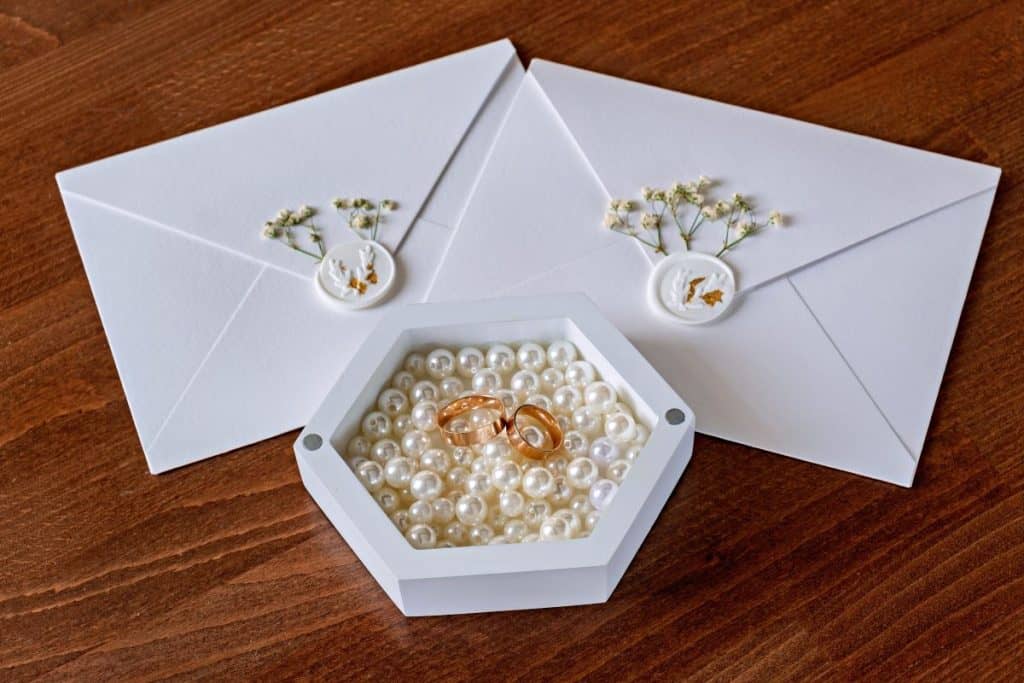
Key Takeaways
- The “pearls bring tears” superstition traces back to Victorian and English folklore, not universal tradition
- Greek, Chinese, and Indian cultures view pearls as symbols of happiness, wisdom, and protection in marriage
- Modern bridal experts agree: if pearls feel right to you, they’re an elegant and meaningful choice
- Pearl quality comes down to five factors (luster, surface, shape, color, and size) that directly affect value and beauty
- South Sea pearls offer superior luster and longevity, making them ideal for bridal heirloom pieces
- Amorn Phuket Pearl cultivates South Sea pearls with in-house grading backed by over 50 years of expertise
Table of Contents
- Are Pearls Good Luck or Bad Luck at a Wedding?
- What Pearls Symbolize for Brides
- How to Style Pearls for a Wedding
- Choosing the Right Pearl: A Grading Guide
- Find Bridal-Worthy Pearls at Amorn Phuket Pearl
- References
- Frequently Asked Questions About Pearls for Weddings
You’ve picked out a gorgeous strand of pearls, but your aunt immediately warns you: “Pearls mean tears in marriage.” It’s one of the oldest debates in bridal fashion. But like most wedding superstitions, the truth depends on which tradition you follow and what the piece means to you.
Wedding ceremonies have featured pearls for countless years. Their meanings have spanned from grief and mourning to purity, fertility, and protection, varying by time period and culture. So which is it? More practically, how do you choose the correct pearls on your wedding day?
Are Pearls Good Luck or Bad Luck at a Wedding?
Where the “Pearls Mean Tears” Idea Comes From
The superstition has roots in English and Victorian-era folklore. Pearls, formed inside an oyster as a response to irritation, were seen as solidified tears. In some European circles, gifting or wearing pearls at a wedding was believed to mean the bride would cry throughout her marriage.
Victorian mourning culture reinforced the association. During the 19th century, pearls were commonly worn as part of mourning dress, which further linked them to sadness and loss. Over time, this connection stuck in British and Western European traditions, and it’s the main reason the myth still circulates today.
What Other Cultures Say
Outside of Western Europe, the picture appears different. Pearls were linked to Aphrodite in ancient Greece and were worn by brides to guarantee joy and avoid tears. In Chinese tradition, pearls represent wealth, wisdom, and good fortune. Indian wedding customs often include pearls for their associations with purity, protection, and fertility.
Even within the “tears” narrative, there’s a counter-tradition worth knowing. Some believe each pearl a bride wears represents a tear she’ll never have to shed in her marriage. The pearl absorbs the sorrow so she doesn’t have to.
The Modern Consensus
Most contemporary wedding planners and stylists take a pragmatic view. If pearls make you feel beautiful and grounded, they’re the right choice. Superstition only carries weight if you give it weight.
Many brides now treat pearls as symbols of purity, new beginnings, and emotional balance, choosing them intentionally as a meaningful and lucky piece of jewelry.
What Pearls Symbolize for Brides
Pearls symbolize sincerity, love, and new beginnings in many cultures. Their slow formation inside a shell is often read as a metaphor for patience, growth, and the quiet strength a relationship needs to last.
Brides sometimes add pearls to their “something old, new, borrowed, and blue” tradition. Some choose tiny pearl hairpins or brooches instead of a whole string, which conveys meaning without being overly superstitious.
How to Style Pearls for a Wedding
For the Bride
A single string of traditional white pearls offers enduring sophistication, especially when paired with tailored dresses and simple necklines. Modern brides might choose drop pearl earrings to highlight their faces, as they don’t detract from an elaborate gown. For bohemian or garden weddings, try layered pearl necklaces of varying lengths to add texture and movement.
Deciding between a statement and a subtle look comes down to your dress. If there’s heavy beading or embellishments, quieter pearl accents like studs, a pendant, or hairpins are more ideal. Simple silhouettes can carry bolder pearl pieces as the main focal point.
Overall, the best pearls to wear on your wedding day as the bride comes down to matching the pearl type to the dress style.
Bridesmaids, Guests, and Grooms
For the bridal party, having coordinated stud earrings or delicate pearl bracelets ties everyone together without overshadowing the bride. For guests, pearl accessories work across nearly every dress code, from formal evening events to casual beach celebrations.
A pearl wedding theme can extend to the groom’s side too, where he might wear pearl cufflinks or tie pins for some understated luxury to the suit.
Choosing the Right Pearl: A Grading Guide
Not all pearls are equal, and the difference matters when you’re selecting jewelry you’ll keep for decades.
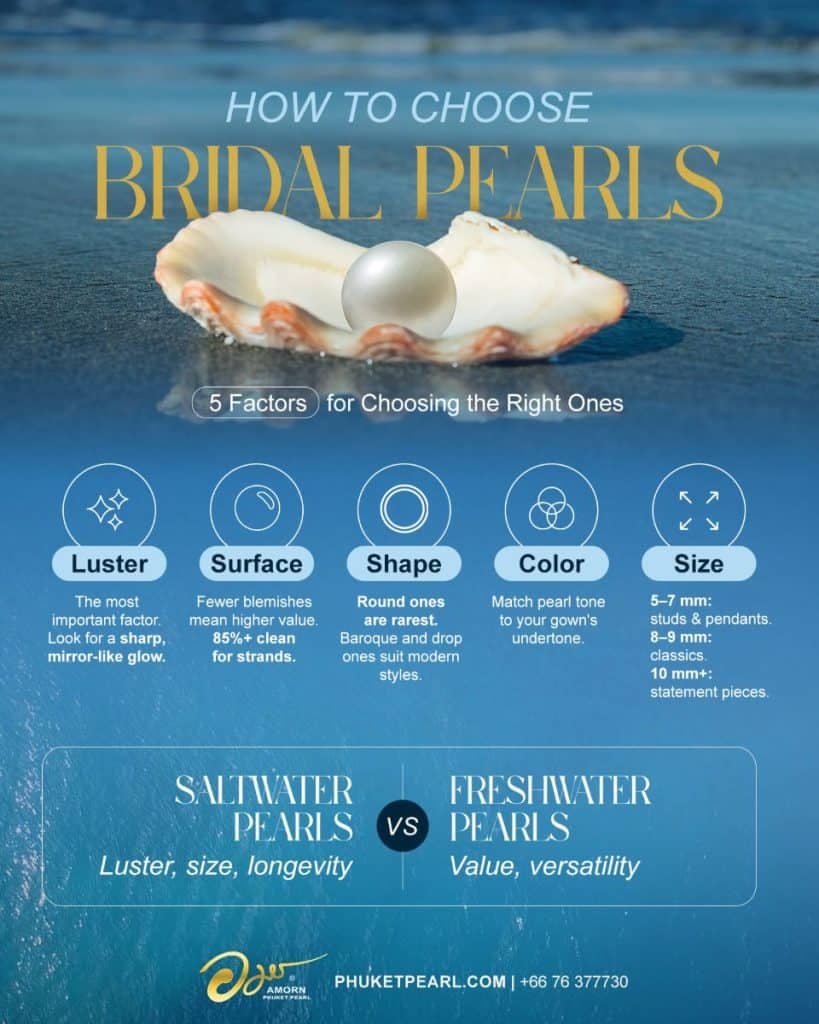
Here are the five factors professionals evaluate during pearl grading.
- Luster is the single most important quality factor, being the intensity and sharpness of light reflected on and just below the pearl’s surface. Fine pearls have a deep, mirror-like glow that seems to come from within, whereas less refined ones have dull or chalky surfaces.
- Surface quality examines blemishes, spots, and bumps. Fewer imperfections mean higher value, though it’s natural and expected to have minor surface marks in genuine cultured pearls. For bridal necklaces, ensure at least 85% of the strand’s surface area is clean.
- Shape affects both aesthetics and price. Perfectly round pearls are the rarest and most valued. Baroque and drop shapes suit modern, asymmetric jewelry designs and can offer excellent value for creative bridal looks.
- Color is largely a matter of preference and coordination. Classic white and cream tones pair with most bridal gowns. Pink overtones add warmth, while golden South Sea pearls suit brides looking for something distinctive. Cool white dresses tend to look best with bright white pearls; ivory gowns work with warmer cream tones.
Size directly impacts price. Larger pearls (8 mm and above) command premium pricing and read as more glamorous. Smaller pearls (5 to 7 mm) keep the look delicate and work beautifully in studs or fine pendants. Choose based on proportion and the jewelry type you’re considering.
When it comes to type, South Sea pearls stand out for bridal heirlooms. They offer superior luster, larger average size, and impressive longevity compared to freshwater varieties. Freshwater pearls provide great value and versatility for modern minimalist or layered bridal styles.
The right choice depends on how you plan to wear the piece, once for the ceremony or for years afterward as an everyday treasure.
Find Bridal-Worthy Pearls at Amorn Phuket Pearl
For pearl wedding jewelry that you’ll wear once and treasure forever, the source matters. Farm-connected pearl brands tend to offer greater grading transparency, tighter quality control, and full traceability from the ocean to the finished piece.
Here at Amorn Phuket Pearl, we have been cultivating Saltwater pearls in Phuket’s Sapam Bay since 1967. With over 50 years of expertise passed through three generations and Geographical Indications and Thailand Trust Mark certification (the first pearl company in Thailand to earn it), every pearl of ours goes through rigorous in-house quality control to bring you only the best pearl quality in Phuket.
Browse our collection of bridal-ready necklaces, earrings, rings, and custom-designed pieces with top pearl grading standards at Amorn Phuket Pearl for yourself today.
You can also book a store appointment for a guided, one-on-one selection to get the best pearls at a wedding.
References
- Pearls and Weddings: The Meaning and Superstitions Behind Them. Retrieved on 13 April 2026 from https://www.klenota.com/Blog/KLENOTA-Jewelry/Pearls-and-weddings-The-meaning-and-superstitions-behind-them
- Pearls at Your Wedding: A Safe Bet. Retrieved on 13 April 2026 from https://www.majorica.com/en/blogs/majorica-universe/pearls-at-your-wedding-a-safe-bet
- What’s the Tradition Behind Wearing Pearls. Retrieved on 13 April 2026 from https://www.theknot.com/content/whats-the-tradition-behind-wearing-pearls
Frequently Asked Questions About Pearls for Weddings
Q1: Which type of pearl is best for bridal jewelry?
Akoya pearls are the classic bridal choice for their round shape and mirror-like luster. South Sea pearls are ideal for heirloom-quality statement pieces due to their larger size and superior glow. Freshwater pearls offer excellent versatility and value for brides looking for modern, layered, or minimalist styles.
Q2: Can bridesmaids and groomsmen wear pearls?
Absolutely. Coordinated pearl stud earrings or simple bracelets tie the bridal party together without overshadowing the bride. Groomsmen can wear pearl cufflinks or tie pins for a subtle, polished accent that complements the wedding theme.
Q3: How should I care for my wedding pearls before and after the day?
Put pearls on last when getting ready, after perfume, hairspray, and makeup have dried. Wipe them gently with a soft cloth after wearing. Store them in a lined pouch or box away from other jewelry that could scratch the surface. Avoid ultrasonic cleaners and harsh chemicals.